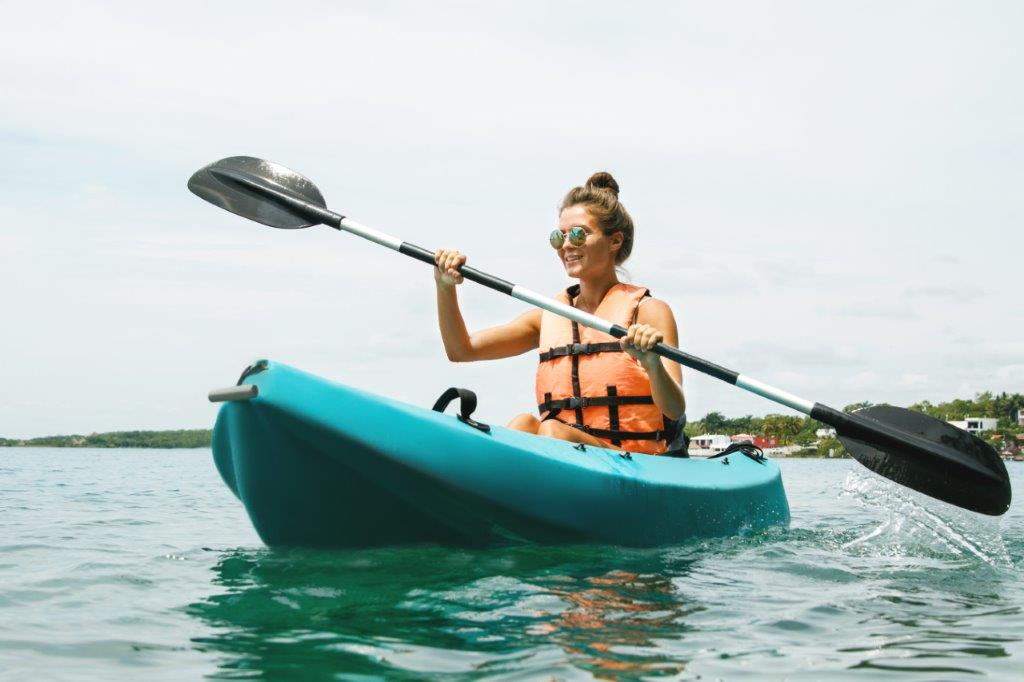
Introduction to Kayaking
Kayaking is an outdoor watersport which involves using a kayak to travel across water. Sea kayaking also known as ocean kayaking comprises of kayaking over open waters like lakes or oceans. Whitewater kayaking refers to kayaking down waterfalls and rapids. Most kayaks have a cockpit style configuration; though another variety is the “sit on top”, in which the occupants sit on top of the kayak in an open area. Other configurations are “inflatable” kayaks and “tandem” kayaks. The major advantage of kayaks is their adaptability, and hence they can be used for recreational activities, search and rescue operations as well as for fishing. continued below ...
BEST PLACES FOR KAYAKING
Glacier Bay, Alaska provides a fiord-filled national park perfect for exploring by kayak. Located only 60 miles northwest of Juneau, the area lets you paddle as many as 16 tidewater glaciers. Another place to explore by paddle craft is the Abel Tasman National Park in New Zealand. Vanatau Island, Fiji is another great destination. Most part of Fiji is comprised of water and offers plenty of interesting places to paddle. Medford, Oregon is home to Crater Lake National Park and the Rogue River, which is known to be home to some of the best outdoor activities in the United States.
SAFETY TIPS
The most important aspect of any outdoor adventure sport is Safety. Proper care should be taken while obtaining the essential equipment for kayaking. Basic kayak equipment comprises of kayak, paddles, life jackets, helmets and a spray skirt.
• Keeping a proper first aid kit is very important.
• Kayaking Apparel is also critical to the safety of the paddler and should not be ignored. Since one should always be prepared for the worst, it is important that quick drying clothes are selected. Loose fitting shorts, tops and jackets preferably made from synthetic material are recommended for kayaking. Cotton clothes should be avoided and if possible a swimsuit should be worn under your outfit. In winters, a synthetic kayaking suit should be worn over the clothes as it keeps one dry and also prevents hypothermia.
• Other essential items are flares, a Swiss army knife and a sea anchor. Anchor is required during extreme wind conditions and flares are needed during rescue operations.
• For emergencies, a cell phone or radio should be kept in a water proof bag.
• Since, paddling is quite tiring, it is necessary that one should develop strength and stamina through regular practice.
• When travelling in groups, it is a good thing to brief everyone about their role and tasks.
• The kayaking gear should be properly maintained and checked before any trip.
Waterhead Presents Random Stories and Photos ...
|
NEW! Speedo Watch Collection @ SpeedoUSA.com!